Atmospheric chemistry
Tracing the changing marine sulfur cycle
Ice cores and chemical models help separate biological change from pollution-driven changes in the atmosphere’s oxidation pathways.

Marine phytoplankton emit dimethyl sulfide, a gas that is oxidized into aerosol-forming sulfur compounds. Those products influence clouds and climate—and some are preserved in ice cores.
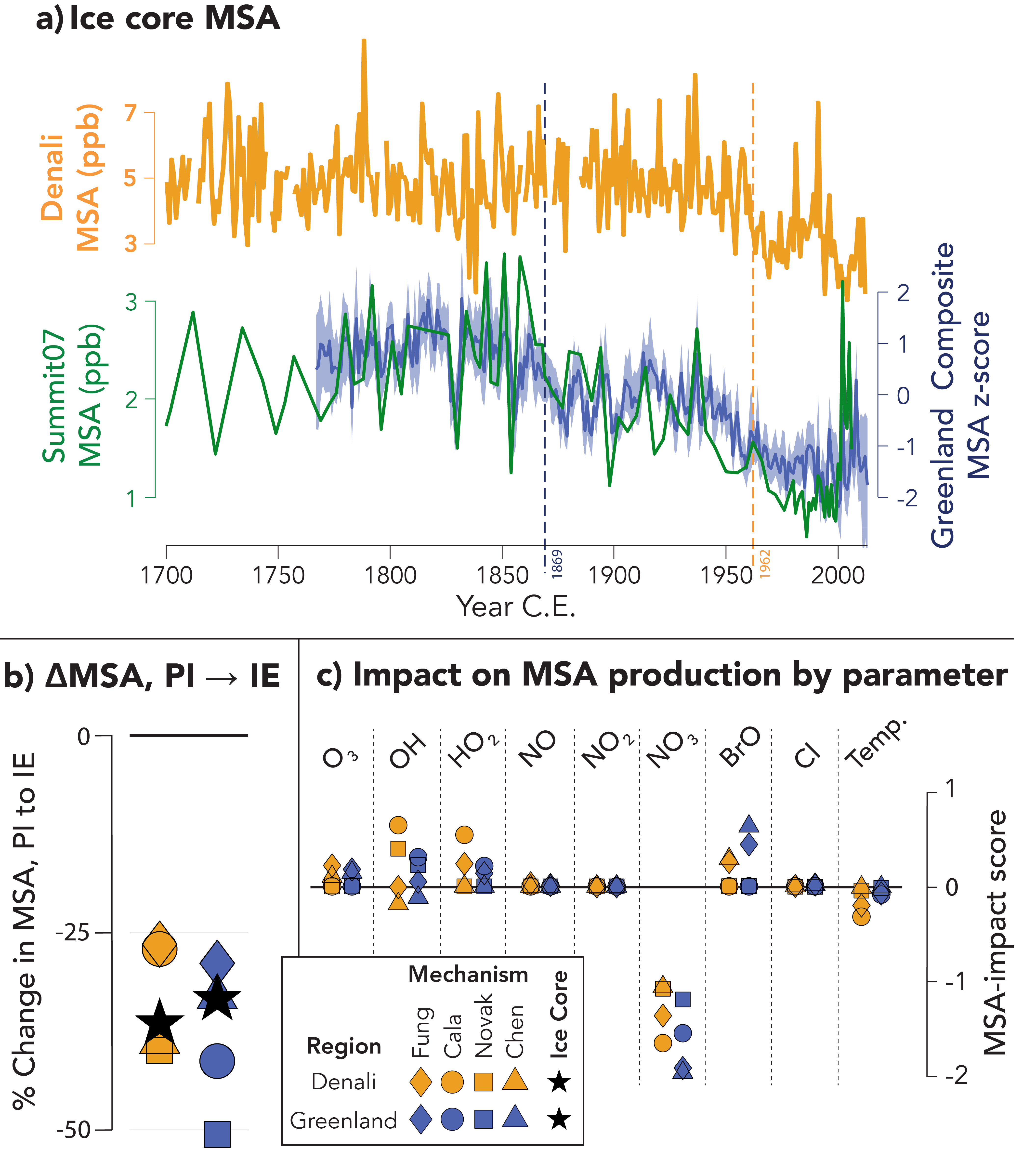
By combining multi-century records with box and global chemical transport models, I investigate why methanesulfonic acid declined across the industrial era. The results show how pollution can alter the chemical meaning of an ice-core proxy.
This work connects microscopic marine life, industrial emissions, atmospheric oxidation, and the chemistry recovered from mountain glaciers.